DIY Phone Case Maker
- 3.7
- Rating
- 10.00M
- Installs
- Free
- Price

 Analysis by App-foxy
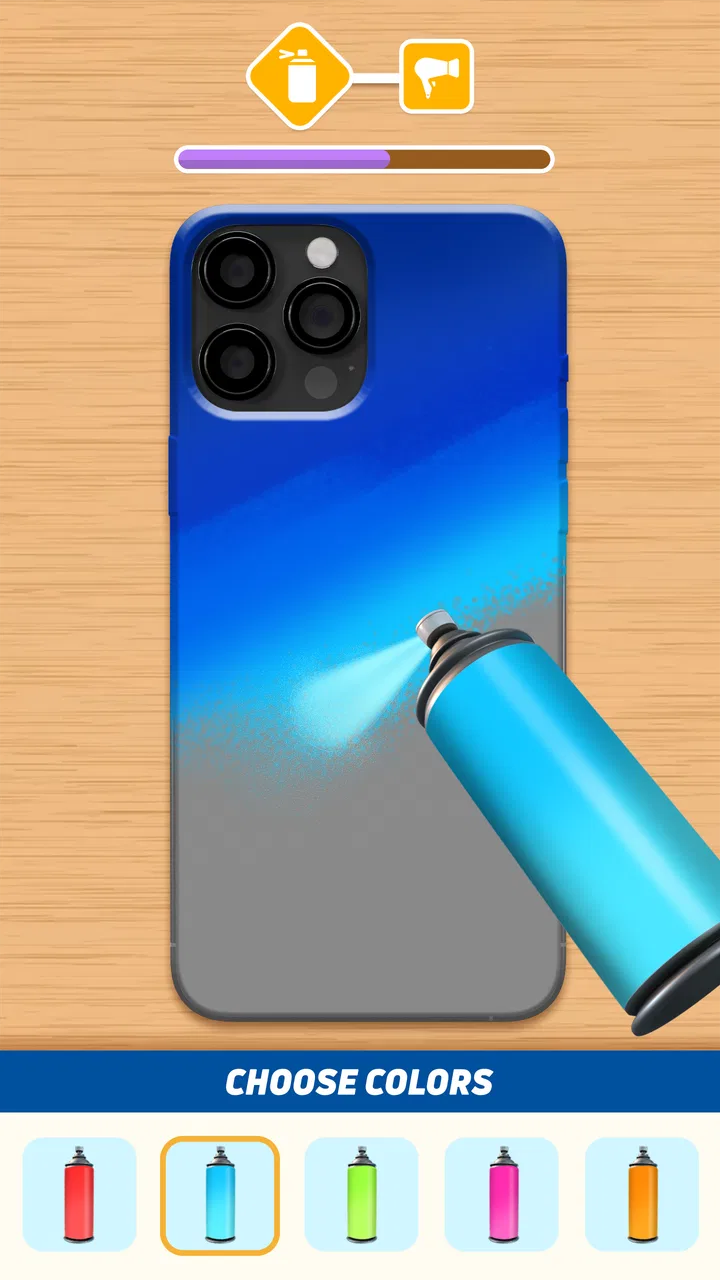
I approached DIY Phone Case Maker expecting a quick casual distraction, and that is exactly where it works best. It is a creative game from Bravestars Games that turns decorating a phone case into a simple, touch-friendly activity. The idea is easy to understand immediately: choose a case, add visual details, and enjoy the satisfaction of seeing a plain object become more personal.
That simplicity is important. This is not a design tool intended to replace professional editing software, and it does not ask me to learn complicated controls before I can start. Instead, it feels like a small digital craft session, suitable for a short break, a relaxed evening, or a child who wants to experiment with colors and decoration. The game is free to play, rated for Everyone, and available for devices running Android 7.0 or later.
My first impression was positive because the central activity is immediately readable. I do not need to study a long explanation to understand what I am supposed to do. The visual goal gives each session a clear direction, while the casual format keeps the pressure low. The strongest part of the experience is the direct connection between a small creative action and an instantly visible result.
You May Also Like

 Blood Strike: 2.5 Anniversary
Blood Strike’s Loadouts Turn Every Drop Into a Tactical Gamble
A close look at Blood Strike’s custom loadouts: how fast access to signature weapons reshapes its battle royale rhythm, rewards preparation, and narrows the gap between fights.

 Pandora - Music & Podcasts
Pandora’s Music Is Easy to Start, but Harder to Recover
Pandora’s strength is its low-effort path from a seed to a station. Its weak spot is how much confidence it asks you to place in connection, setup, and quiet recovery.

 8 Ball Pool
 Is Built on Rivalries, Rematches, and Routine
A close look at the rivalries, rematches, shared routines, and unanswered safety questions that turn a quick pool match into a persistent mobile community.

 Samsung Music
’s Quiet Strength Is Playing What You Already Own
Its reach comes less from spectacle than from dependable access to a personal library. That simplicity is both the app’s strongest retention engine and its ceiling.

 AccuWeather: Weather Radar
AccuWeather Review: A Quick, Clear Forecast for Everyday Decisions
For everyday plans, the best forecast is the one you can understand quickly. AccuWeather makes rain timing, radar, and local conditions easy to act on, with a few trade-offs.

 Hill Climb Racing
Why Hill Climb Racing Still Turns Crashes Into One More Run
A tiny car, a bumpy hill and one more upgrade: Hill Climb Racing keeps resurfacing because its simple chaos makes every near-miss feel personal.
More From Our News Desk



From a plain case to a personal design
The game’s setting is intentionally familiar rather than elaborate. There is no large fictional world to learn, no character backstory to follow, and no complicated narrative framework competing for attention. The phone case is the world, and the design process supplies the progression. That narrow focus gives the game a coherent identity: everything points back to making an ordinary object look more expressive.
I like this approach because it makes the art direction easy to understand. The appeal comes from transformation. A blank or basic case provides a visual starting point, and the decorating process creates the movement from “unfinished” to “mine.” That kind of before-and-after contrast is especially effective in a casual game, where the reward needs to be clear without requiring a long session.
The creative language also makes the game approachable for younger players. A child can treat each case as a small art project, while an adult can use the same activity as a low-effort way to unwind. The Everyone rating fits that broad audience. Still, the lack of a deeper story means that players looking for characters, exploration, or a more developed fictional setting will probably find the presentation too limited.
One useful way to play is to give each design a simple theme before touching the controls. I might decide on a bright summer case, a soft pastel style, or a deliberately messy pattern. That small decision prevents the session from becoming random tapping and makes the final result feel more intentional. It also reveals one of the game’s quiet strengths: it encourages visual choices without demanding that I already know anything about art.
I found that the best results come from treating the case as a composition rather than filling every available space. Leaving some areas visually calm can make the decoration stand out more clearly. This is a practical tip that the short store description does not communicate, but it changes how satisfying the activity feels. The game is more enjoyable when I pause to look at balance, contrast, and the order in which I add details.
A small creative space with a clear audience
As a casual game, this is particularly well suited to people who enjoy customization but do not want a demanding challenge. It can work during a commute, while waiting for food, or in a short break when I want something more active than scrolling but less demanding than a strategy game. The self-contained theme means I can understand the purpose of a session even if I have not played for several days.
A realistic everyday use case would be a parent handing the phone to a child for a brief creative activity. The child can focus on colors and decoration, while the straightforward premise avoids the learning curve found in many building or simulation games. I would still supervise younger players around optional purchases, but the basic concept itself is easy to explain and easy to revisit.
It can also appeal to someone who enjoys looking at phone accessories and imagining different styles. The game does not require me to buy a physical case or commit to a real-world design, so experimentation is inexpensive and reversible. That makes it a useful place to test a visual idea before deciding whether a similar style would work on an actual case.
On the other hand, I would skip it if I wanted a serious digital illustration experience. A dedicated drawing application offers more control over layers, brushes, precision, and export workflows. A puzzle game would be a better choice for someone who needs escalating objectives and measurable challenge. This title sits between those alternatives: it borrows the satisfaction of crafting without becoming a full art studio, and it uses game structure without turning decoration into a demanding contest.
Sound, pacing, and the feel of each session
The mood is shaped less by dramatic storytelling and more by the rhythm of small actions. Selecting a design element, placing it, and seeing the case change creates a gentle sequence. That pacing suits the subject matter. Decorating a case should feel calm and tactile, not frantic, and the game’s casual identity depends on preserving that sense of manageable progress.
I think this is where the presentation and mechanics need to support each other. If the visual feedback is clear, every tap feels meaningful. If the screen becomes too busy, the creative process can start to feel like a checklist. The best moments come when the interface gets out of the way and lets me judge the design itself.
The sound contributes to that light, accessible mood rather than trying to make the activity feel epic. In a game built around decoration, audio works best as a quiet confirmation that an action has registered. I would not choose this title for a rich musical experience, but that is not a serious weakness here. The main pleasure comes from the visual transformation, and an overly forceful soundtrack would probably distract from it.
There is also a practical advantage to this restrained rhythm: I can play while relaxing without feeling that I am falling behind. The game does not need to dominate my attention in the way an action title might. I can make a few choices, inspect the result, and stop when the design feels complete. That makes the pacing appropriate for short sessions, although players who prefer constant surprises may find it too quiet.
My advice is to slow down instead of tapping through every option immediately. The first available decoration is not always the best foundation for the final look. I get more from the game when I compare a few possibilities, consider how they interact, and then commit to a direction. This turns a very simple activity into a more thoughtful visual exercise without adding artificial complexity.
Where the game mechanics fit the theme
The mechanics are strongest when they stay close to the fantasy of making something by hand. Choosing visual elements and arranging them gives me a sense of authorship, even though the experience is simplified for mobile play. The controls are approachable enough for a casual audience, and the objective remains understandable from one session to the next.
That simplicity also creates the main trade-off. The more a player understands about design, the more likely they are to notice the boundaries of a guided mobile game. Someone who wants exact placement, detailed editing, or complete freedom may feel that the available creative space is narrower than expected. The game is not weak because it is simple; it is simply aimed at a different kind of creativity.
I would describe the progression as motivational rather than deeply strategic. The satisfaction comes from finishing a case and seeing a recognizable personal style emerge, not from mastering a complex system. This makes it a good introduction to visual customization, especially for players who might be intimidated by professional creative software. It also means that long-term engagement depends on how much the player enjoys repeating the basic design loop.
Optional purchases are part of the experience, with items priced at $2.99 each. I would approach those carefully. The free entry point is useful for deciding whether the decorating loop has enough variety for me, and there is little reason to spend immediately before understanding how much I will actually play. For families, it is worth agreeing on purchase rules in advance so that the relaxed creative mood is not interrupted by an unexpected transaction.
The current version is 1.1.8, and the game has already attracted over five million installs. Its average rating is 3.7 from around two and a half thousand ratings, which suggests a reasonably broad audience but also leaves room for mixed reactions. I read that combination as a reminder to keep expectations realistic: the game has clear appeal, yet its lightweight format will not satisfy everyone.
There is a small distinction between the number of ratings and the number of written reviews that is useful when judging any casual title. Here, the written review total is around two dozen, so the average score gives a broader signal than the detailed comments alone. I would use the rating as a general indication of reception, then decide based on whether the simple case-making concept matches my own taste.
How it compares with familiar alternatives
Compared with a standard coloring game, this one has a stronger object-based goal. I am not simply filling an abstract picture; I am shaping something that resembles an item I might actually use. That makes the result feel more personal. Compared with a full customization simulator, however, it is likely to feel lighter and less demanding, which can be either a benefit or a limitation depending on what I want.
Compared with a drawing app, the game offers a more guided route to a finished result. I do not need to begin with an empty canvas or understand advanced tools. The trade-off is that I surrender some precision and freedom. For a quick creative break, I prefer that compromise. For a carefully planned design that I want to reproduce outside the game, I would choose a dedicated design application instead.
It also differs from puzzle-focused casual games because the reward is aesthetic rather than numerical. I am not primarily trying to beat a timer or solve a difficult board. The pacing is more reflective, and the success condition is tied to whether I like the case I created. Players who need constant challenge should know that this is a customization activity first and a traditional game second.
One practical workflow makes the comparison especially clear. I can use the game to explore a few broad visual directions, take note of the style I prefer, and then move to a real design tool if I need exact dimensions or a physical product. In that role, it becomes a low-pressure idea generator rather than a replacement for professional preparation.
A calm recommendation with clear limits
After spending time with it, I see DIY Phone Case Maker as a focused casual game that understands its own appeal. Its art direction keeps attention on the transformation of the case, its gentle rhythm supports short sessions, and its mechanics make creative play accessible to people who might not normally open a design application.
I would recommend it to children, casual players, and anyone who enjoys visual customization without wanting a complicated project. It is also a sensible choice for testing color combinations or simply relaxing with a small activity that produces a visible result. The free price makes it easy to try, while the Everyone rating supports its family-friendly positioning.
I would not recommend it to users seeking advanced illustration tools, a substantial story, competitive depth, or a large world to explore. The same focus that makes the game approachable can make it feel repetitive for players who want constant mechanical variety. Optional purchases also mean that families should keep an eye on spending, particularly if several designs encourage experimentation.
My final judgement is favorable, with the right expectations. This is not a deep simulation of product design, but it does not need to be. It creates a coherent mood around a small creative task and gives that task enough structure to remain engaging. If you want a friendly, low-pressure way to turn phone-case decoration into a playable activity, this is worth trying; if you want precision or complexity, choose a dedicated creative tool instead.
FAQs for DIY Phone Case Maker
01What is DIY Phone Case Maker and how does it work?
DIY Phone Case Maker is an innovative app that allows users to design and customize their own phone cases. Users can choose from a variety of templates and materials, add personal photos, and apply unique designs to create a case that reflects their style. The app features easy-to-use tools for editing and previewing your designs.
02Is DIY Phone Case Maker free to use?
The app offers a free version with basic features, allowing users to explore design options and create simple phone cases. However, there are premium features available for purchase, which include exclusive templates, advanced editing tools, and high-quality materials for printing your customized phone case.
03What devices are compatible with DIY Phone Case Maker?
DIY Phone Case Maker is available for both Android and iOS devices. It requires Android version 5.0 or higher and iOS version 11.0 or later. The app is optimized for both smartphones and tablets, ensuring a seamless design experience across all compatible devices.
04Can I use my own photos and graphics in DIY Phone Case Maker?
Yes, DIY Phone Case Maker allows users to upload their own photos and graphics to personalize their designs. You can import images from your device’s gallery or cloud storage, and the app provides tools to adjust size, position, and effects to fit your desired look.
05How long does it take to receive the customized phone case?
Once you finalize your design and place an order, the production and shipping time can vary depending on your location and chosen shipping method. Typically, it takes 5-10 business days for the customized phone case to be produced and delivered. The app provides tracking information to monitor your order’s progress.
Pros
- Wide variety of design options.
- User-friendly interface.
- High-quality graphics.
- Regular updates with new patterns.
- Easy sharing on social media.
Cons
- Limited free features.
- Ads can be intrusive.
- Occasional app crashes.
- Requires internet for full use.
- Customization options can be overwhelming.

DIY Phone Case Maker
Gallery